| As the film industry continued to fight the battle for audiences wanting to watch movies at home via streaming versus seeing them in theaters, I was thankful that both venues still found the bravery to make enough films that even warranted a best of the year list. And for those ones that did, they truly were spectacular. My top ten in particular are all so close, and my top four I almost consider co-best of the year because it's truly hard to distinguish one over the other. These best films shared so many things in common that always make great movies, but they also were so different in their execution, but in the end, their power was thankfully an example that brave filmmakers still do exist and they're able to find the backing in an industry still so risk averse to original ideas and riskier material. So many of these movies from 2025 will be movies I revisit again and again, and that's usually one of the best indications that 2025 was a truly great year for the art form I love so much. And on a personal note, it was an honor to have been involved in what I thought was the best documentary of the year. From a film job I took in 2019 to finally seeing some of my footage creating such an urgent and powerful film, I couldn't have been more proud to have been a part of it. You'll see more about it at #10. |
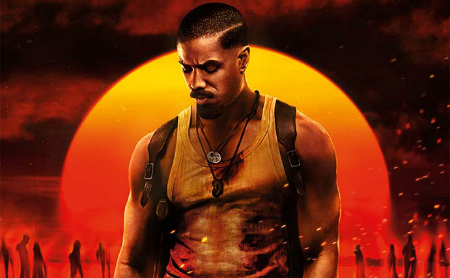
1. SINNERS
As I mention later in my countdown, this year was one of the truly great film years, and as such, my top ten especially are all so close to each other, I just want to declare them all the year's best film. And particular between this film and "One Battle After Another", it's hard to find any one thing that would say this film is better than the other. In fact, I can see this 1 and 2 probably shifting many times as it did when I was first trying to rank the best film experiences of 2025.
But ultimately, I did want to pick one, and Ryan Coogler's monumental achievement finally got the slight edge. And it's almost like I knew it from the moment I first saw it. From the very beginning as director Ryan Coogler starts drawing us into this world of 1932 Mississippi, we meet one unique character after another, and it reminded me of the kind of cinema that was once great but all too rare nowadays.
From its very first moments, you could feel this movie would be something special, a film that doesn't just blend genres, but reimagines them. It is a visionary Southern Gothic epic that fuses horror, period drama, music, and supernatural myth in a way few filmmakers have attempted, or succeeded at. What feels familiar from past films and stories becomes electrified and alive on screen through Coogler's daring direction and a cast that immerses itself fully in the world he's built.
Michael B. Jordan was absolutely astonishing in dual roles, making both characters completely unique and you have no trouble knowing who is who. And this ensemble, possibly the best cast of recent years, shines from veteran performers like Delroy Lindo to the stunning film debut of Miles Caton.
One of the things that truly makes this film better than it could ever have been otherwise is the magnificent musical score by one of our truly greatest living composers, Ludwig Goransson. The music IS the key character in this film, and along with some other film scores this year, it's a refreshing reminder to contemporary filmmakers to put more work into film scores that not only stand out, but are absolutely key to the success of the film. Rather than simply underscoring scenes, Goransson's music is its own character. Drawing from authentic blues traditions and integrating instruments like a 1932 Dobro resonator guitar - the same guitar featured in the film - the score bridges past and present while enhancing every emotional contour of the story. Goransson's work doesn't just complement the visuals; it elevates them, grounding the supernatural and dramatic arcs in a soundtrack that feels both contemporary and timeless.
Which brings me to the sequence I could not stop re-watching and still think is one of the most stunning sequences ever placed on film. What starts as an electrifying performance of "I Lied To You" in a 1930s Mississippi juke joint becomes something transcendent, a surreal montage that demonstrates what only cinema can do. As Miles Caton's voice carries through the room, Coogler's camera breathes life into that music, dissolving the boundaries of time and genre: tribal dancers, blues and hip-hop influences, vintage rock energy and future rhythms all collide in a celebration of Black musical heritage that is purely breathtaking.
Every single craft is working at the top of their game, from the gorgeous cinematography, the meticulous period detail, and immersive production design making 1930s Mississippi absolutely live and breathe. And I haven't even mentioned the supernatural and horror elements of the film, which sure we have seen before, but never united with what comes before like Coogler has done here. This is not a horror film or a simple genre film. This is the greatest of what cinema can do.
Besides that, there's the story of what the success of this film ultimately means. I've long railed against most of contemporary cinema. Every year when I see the list of the highest grossing films at the boxoffice, I'm often shaking at my head in sadness as to what studios deliver and audiences consume compared to decades past when studios took more risk with original visions and audiences actually responded. Before audiences even showed up to this film, parts of the press framed the film less as a story worth engaging with and more as a "problem" to be debated. Not because it failed, but because of what it dared to change.
It was released by Warner Bros, but it was made under radically unorthodox terms that gave Ryan Coogler real ownership, final cut, and long-term rights; a personal deal that challenged traditional studio power dynamics and made some executives openly nervous. The irony? While coverage fixated on whether this deal was "dangerous," audiences thankfully showed up. "Sinners" became a box-office smash and in doing so, proved that a filmmaker-first model can work. Ultimately, it was a win for creators, leverage for the little guy, and a reminder that movies don't belong to "gatekeepers." They belong to the people who make them and the audiences who show up. So if more studios could learn this and more filmmakers with vision and originality were given the opportunity to bring their stories to life, we could have more extraordinary film years like 2025 was.
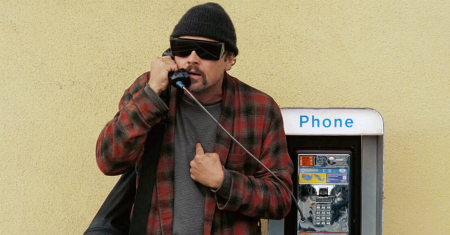
2. ONE BATTLE AFTER ANOTHER
Paul Thomas Anderson has been one of our greatest living film directors for such a long time, and for good reason. His movies are singular achievements embodying the very best of film craft, acting, character development, and vision. And now working on a much larger scale and in beautiful VistaVision, he has crafted a film for the ages that is even more urgent and timely due to the current climate in our country, but will remain universal for its study into the costs of revolution and standing up for what is right when there are those would oppress.
From the very first shot, the movie hurtles forward with a kind of propulsive energy you don't often see outside the biggest action spectacles, yet it always feels rooted in something real and character-driven. The chaotic brilliance of the script, equal parts adrenaline and heart, never lets up during its entire runtime. Leonardo DiCaprio anchors the film with a performance that's both flawed and ferociously alive; he's not just a former revolutionary on the run, he's a father wrestling with his past and what it truly means to protect the people you love. I truly believe it's DiCaprio's best performance yet. And the supporting cast is the best you could have ... Benicio del Toro is an absolute delight, and every scene he's in are my favorites in the film.
Sean Penn's portrayal of Col. Steven J. Lockjaw is equal parts menace and complexity, the kind of character that feels lived-in, unpredictable, and eerily magnetic in every scene he inhabits. Then there's Chase Infiniti, who emerges as one of the most refreshing revelations of the year. As Willa, Bob's fiery, resourceful daughter, she combines vulnerability with gritty determination, making her the emotional heart of the story. And Teyana Taylor delivers the true best supporting performance of the year. As Perfidia, a force of nature with unmatched screen presence, she brings a raw, emotional depth and a physical command that leaves its effect on the entire film even when she's not around.
The way these actors play off each other is from the very best of the PTA tradition, from the combustible friction between Bob and Lockjaw to the quiet chemistry between Bob and Willa, to the layered emotional complexity Taylor brings to her character's legacy, and to the absolutely hilarious moments between Bob and del Toro's Sergio. Powered by Anderson's visionary direction and a script that feels both wildly entertaining and deeply human, this was truly one of the most complete cinematic experiences of recent years.
There wasn't a bad note anywhere. Jonny Greenwood's score races between manic, eerie, and deeply emotive, driving the whole thing forward like an engine you can feel under your seat. Anderson's knack for blending absurdity with poignancy, a signature that's never felt this sharp, turns moments that could easily have been caricature into something resonant and real.
Paul Thomas Anderson's films have usually always ended up being movies that I have re-watched so many times over, and this will easily join that pantheon. His flawed characters are continually ones I wish to revisit, to relive their struggles as we go through ours, and to experience the redemptions they eventually find, one way or one battle after another.
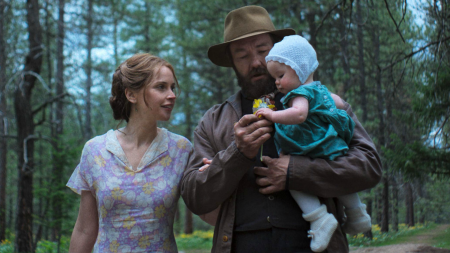
3. TRAIN DREAMS
I don't think I've found myself often comparing a great motion picture with poetry. But if there was ever a film that I think deserves to be compared to the best visual poetry, this would be the one. Clint Bentley and Greg Kwedar have crafted something extraordinary out of Denis Johnson's novella: a movie that isn't about big events so much as the quiet, profound weight of an ordinary life lived with purpose and dignity.
Joel Edgerton's performance as Robert Grainier is the type of performance that often doesn't get enough acclaim or notice - with minimal dialogue, he communicates a whole interior world of longing, resilience, and heartbreak. I haven't seen a performance this richly nuanced all year. Edgerton makes you know this man like someone you've known all your life. What struck me most was how the film uses silence, landscape, and memory the way a great novel uses language - not to explain life, but to feel it. The cinematography is breathtaking and astonishing, shot almost entirely with natural light. Wide, unhurried shots of the forests and frontier make you sense the sheer scale of the world Robert inhabits and the quiet struggle to make meaning within it. These aren't just gorgeous images - they're emotional touchstones that carry the film's weight in every single inch of their frames.
Granted, this is a movie that asks for patience. There's no clear villain, no cathartic confrontation, no tidy resolution -- and that's precisely where its power comes from. It captures existence, not drama, and in doing so honors the unsung lives that built this country, the fleeting nature of joy, and the way memory can both haunt and sustain us.
I found myself moved not by manufactured moments, but by the accumulation of quiet ones: the gentle exchanges, the way the camera rests on a whisper of wind through trees, the motions of a life shaped by work, loss, and love. There's a meditativet poetic rhythm to this film - it invites you to slow down and be with it, and in return it gives you something deeper than most films ever come close to delivering. This is a beautiful and humble film about what it means to endure, to remember, and to find meaning in the smaller spaces that exist between the larger moments in our lives.
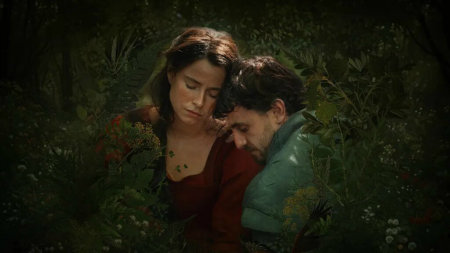
4. HAMNET
Oscar winning filmmaker Bong Joon Ho said this recently about Chloe Zhao's magnificent film: "You know, toward the end of the film, as a creator and artist myself, so many things sort of went through my mind. And in the end, watching the film, I just felt so much gratitude for you, Chloe. I think as artists, as years go by, you can grow exhausted. You become a bit cynical about creating itself. And especially for me, I just went through a couple of difficulties with my relationship with creating art recently; and I felt healed watching this film. I felt like it's time for me to make something again."
Not only is this film a moving inspiration to what can be done with the best in cinema, it's also one of the most deeply emotional film experiences of recent years. Many films have dramatized the unimaginable tragedy of a parent losing a child. But incredibly few have felt this honest but also been as hopeful for what one's path through grief can ultimately lead to.
What struck me most was how the film captures the raw emotional landscape of loss without ever resorting to spectacle. The way Zhao lingers on small gestures and quiet moments makes every look, every silence between characters, feel like a beat of the heart - intimate, tender, and achingly real. The English countryside, shot with breathtaking patience, almost becomes another character, witnessing the family's joys and shattering sorrow.
At the center of this story are two of the finest performances this year. Jessie Buckley's portrayal of Agnes is nothing short of extraordinary - she embodies love, fear, and heartbreak with such emotional precision that you feel as though the grief she carries is universal. Paul Mescal, as William Shakespeare, brings a quiet intensity that complements her in every scene, making their connection feel lived-in and raw.
By tracing how Shakespeare and his wife navigate the unbearable loss of their son, "Hamnet" suggests that great art can emerge from everyday pain, giving grief a language and shape. At its core, this film reminded us how deeply grief connects all of us. Across time. Across generations. And how people going through it find ways to express what can't be said - through film, music, writing, performance, or any form of art they can hold onto. Perhaps that's why it resonates so much with anybody that can craft art out of grief. I know I've been thankful so many times throughout my life that I could channel my grief into art. This film doesn't try to explain grief. It just sits with it. And sometimes, that's exactly what we need. Out of all the films this year, this one felt like the greatest gift to humanity.
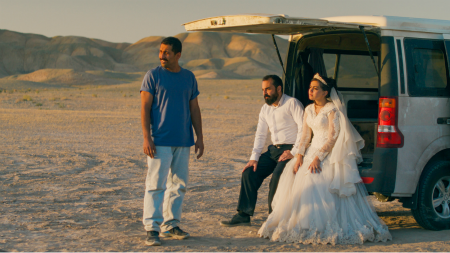
5. IT WAS JUST AN ACCIDENT
In a year of some truly masterful international cinema, for me, Jafar Panahi's incredibly brave film was the best of all of them ... a true example of masterful storytelling, engaging characters, and an important political story coming out one of the most oppressive regimes on the planet. But it's not just a political statement; it's a deeply human exploration of trauma, justice, mercy, and the messy, often contradictory impulses to determine what justice looks like.
At first glance, the premise seems deceptively straightforward: a hit-and-run on a lonely road sets into motion a tense journey through memory, fear, and revenge. But Panahi, working against a backdrop of real-world repression that he himself has faced, uses that narrative as a springboard into something much bigger - a meditation on the very nature of forgiveness and the psychological prisons we carry long after physical ones have closed.
The performances - particularly from Vahid Mobasseri as the haunted mechanic - are raw and lived-in, blurring the line between scripted drama and spontaneous human expression. Everywhere you look there are moments of startling empathy, uneasy humor, and real pain. The film's quiet long takes and understated camera work force you to sit with the characters, to wrestle alongside them with questions of culpability and conscience that most movies never dare to ask.
What makes this film truly unforgettable is the way it balances its political critique with genuine humanity. Panahi doesn't offer easy answers - doesn't let you off the hook with tidy resolutions - but he does invite you into the emotional contours of every choice his characters make. It's gripping as a thriller, haunting as a moral puzzle, and essential as a piece of global storytelling that reminds us why cinema can still change the way we see ourselves and our world.
And its ending is truly one of the most haunting and brilliant of the year. The last sounds - a subtle and unsettling echo - tap into the anxieties of the past and the unresolved questions of what lies ahead, underscoring the impossibility of neatly reconciling trauma and justice. It's a beautifully haunting choice that feels less like an ending and more like an invitation: to sit with the moral complexities of the film and continue to wrestle with them as we undoubtedly will have to do. This is brave filmmaking of the highest order, considering that of all the remarkable directors this year, Panahi may once again face prison for being bold enough to challenge his country's government with his art ... something we sure need a whole lot more of.
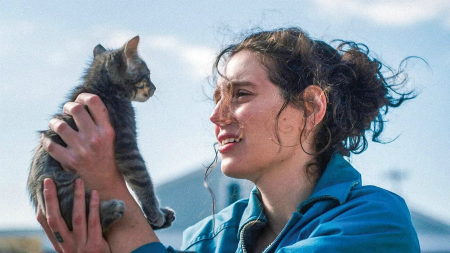
6. SORRY, BABY
Talk about another film that was such a surprise this year, and another deeply emotional experience as well, a film that balances heartbreak with humor, and pain with unexpected warmth in a way that feels much more honest than most films ever do.
At the center of everything is Eva Victor's remarkable work - not just as the lead actor, but as the writer and director of what feels like a fully realized cinematic voice. Her portrayal of Agnes - a literature professor learning to navigate life after a traumatic incident - is subtle, layered, and deeply empathetic, never tipping into cliche or easy answers. That vulnerability gives the film a texture that is refreshingly honest and real.
What surprised me most was how the movie refuses to be one thing. It's funny without being flippant, tender without ever sliding into mawkishness, and it doesn't shy away from showing how absurd life can feel in the aftermath of pain - whether that's a doctor with terrible bedside manner, an insensitive bureaucracy, or a stray cat offering comic relief in the midst of anguish. Its use of small moments - a panic attack in a parking lot, an earnest attempt at a "good sandwich," random encounters turned meaningful - gives the film an authenticity that we simply don't see in most movies. Eva Victor shows a mastery of tone that is truly remarkable.
Supporting performances - especially from Naomi Ackie - add emotional richness and texture, deepening the story's exploration of friendship, identity, and survival. And rather than framing trauma as a defining event, the film shows how life continues in all its messy, unpredictable complexity - sometimes joyful, sometimes painful, and often both at once.
Through smart dialogue, striking visual choices, and an unflinching focus on character over spectacle, "Sorry, Baby" becomes not just a movie about surviving trauma, but a celebration of the resilience and humor that can carry us through.
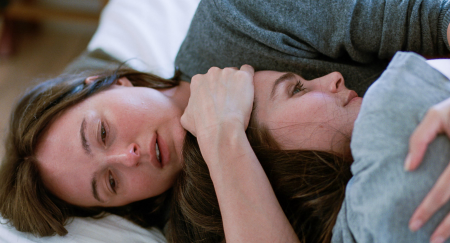
7. SENTIMENTAL VALUE
In a year of some truly original and powerful international films, one of the ones I'll most want to revisit was this deeply emotional film from director Joachim Trier. From the opening moments, Trier crafts a story that's far more than a simple family drama. At the heart of this film is a fractured father-daughter relationship - complex, raw, sometimes unsparing - that's grounded by performances of beautiful and rare nuance. Renate Reinsve delivers what may be her most compelling work yet as Nora, a stage actress grappling with old wounds and unresolved love. Stellan Skarsgard, as the charismatic yet flawed Gustav, matches her every step of the way, imbuing his character with equal parts genius and stubborn vulnerability. The ensemble, including Elle Fanning and Inga Ibsdotter Lilleaas, rounds out a cast that critics and Oscar voters rightly celebrated as some of the year's best acting across the board.
What makes this film so special isn't just the emotional honesty of its performances, but the way Trier lets its emotions unfold. There are no cheap melodramatic moments here - instead, the film builds its power quietly, in the uncomfortable pauses, in the complicated gestures that speak louder than any line of dialogue. It's a movie about what goes unsaid, the reverberations of regret, and the fragile hope that even deeply wounded relationships can find a path toward understanding.
Visually and thematically, the film is a meditation on memory and place. The family home in this film is a character in its own right, full of history and emotion, serving as a living metaphor for the ties that bind across generations. Trier's script, co-written with Eskil Vogt, strikes a rare balance: sharp and witty one moment, devastatingly introspective the next. I was astonished how deeply moving this film was without ever feeling manipulative, thoughtful without ever getting bogged down in abstraction. It's the kind of film that makes you examine your own family, your own regrets, and the quiet, stubborn beauty of trying to connect where connection once failed.
In a year full of so many incredible movies, this is one of the best examples of authentic storytelling, masterful performances, and honest emotional depth.
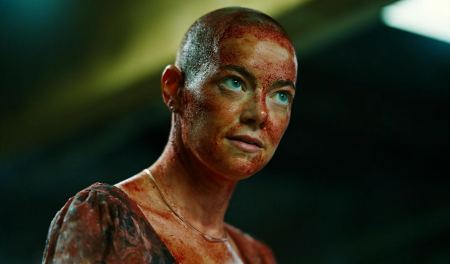
8. BUGONIA
Of all the films that surprised me the most in 2025, Yorgos Lanthimos's remarkable film was definitely one I couldn't predict where it would go and never anticipated I would end up loving so much. A daring, unsettling, and wildly original film that cements Lanthimos as one of our most provocative and fascinating filmmakers. What could have been a mere dark comedy about conspiracy spirals instead becomes an intense psychological duel that that is nothing short of incredible.
Emma Stone delivers one of her most compelling roles to date, truly embodying a woman with a magnetic blend of icy control and simmering vulnerability that anchors the film. Opposite her, Jesse Plemons is nothing short of extraordinary - his Teddy is charismatic, menacing, and heartbreakingly sincere, a conspiracy-obsessed man who is convinced a corporate CEO is an alien bent on humanity's destruction. Lanthimos uses this incredible premise to build a biting critique of paranoia, societal fractures, and modern disillusionment. The film blends black comedy, psychological suspense, and surreal imagery in a way that only Lanthimos could pull off, always threading a delicate line between comedic absurdity and genuine dread.
Robbie Ryan's cinematography is rich and textured, giving every frame a haunting beauty that enhances the story's uneasy atmosphere. And the score - booming and abrasively rhythmic - amplifies the film's emotional and tonal shifts.
It's not just a critique of corporate excess or echo-chamber mentalities; it's a thoughtful, darkly funny exploration of belief systems, human fragility, and the ways we grasp for meaning in an increasingly chaotic world. With unforgettable performances and a bold narrative, it's an unsettling yet beautifully surprising experience.
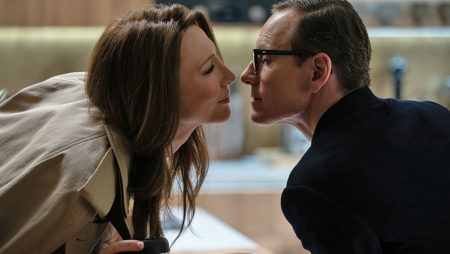
9. BLACK BAG
In a year of some truly remarkable efforts by so many brave filmmakers, one of our best directors reminded us what tight storytelling and filmmaking craft truly are. Steven Soderbergh delivered a sleek, intelligent spy thriller that felt both timeless but also very contemporary. This was a film that merged classic espionage influences with contemporary emotional stakes, the type of intelligent film we don't get to see much these days.
What makes this film so rewarding is how tightly everything is constructed. In just around 90 minutes, the film unveils its premise with elegant efficiency, builds tension through conversation and character, and ties every thread together with satisfying precision. There's a rare discipline to its pacing; nothing overstays its welcome and every scene feels purposeful.
Michael Fassbender and Cate Blanchett remind us why they've long been two of our greatest actors, delivering performances that effortlessly carry both the intrigue and the intimacy of the story. Their chemistry grounds the central dilemma - loyalty to one's country vs. loyalty to one's partner - in genuine emotional weight, giving the espionage twists a human core that most thrillers miss.
The intelligent screenplay respects the audience enough to unfold its mysteries without excessive exposition, allowing us to feel smart for putting pieces together even as it continually surprises. The supporting cast, from Rege-Jean Page's suave intrigue to Tom Burke's lighter touches, surprisingly enriches the film without ever overwhelming the main narrative.
It's also a gorgeous film. Soderbergh, who also served as his own cinematographer and editor, crafts a world that's cool and glamorous without ever feeling superficial. The production design, costumes, and crisp framing all contribute to a sense of lived-in sophistication - the kind that makes you want to revisit the film just to soak up the style.
Ultimately, "Black Bag" proves that great thrillers don't need explosions or endless chase sequences to be gripping. They need commitment to character, economy of story, and confidence in craft, all of which this film masterfully delivers. It's a bold reminder that original storytelling still has a place in mainstream cinema, and it's also one of the most satisfying spy dramas in years.
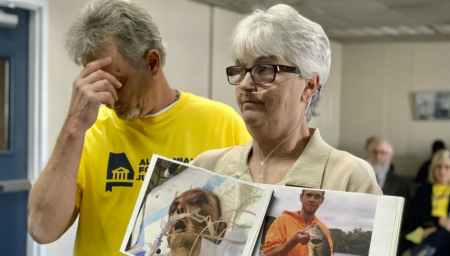
10. THE ALABAMA SOLUTION
It was 2019. I was hired for a filming job for a documentary I didn't know much about. They already had a main cinematographer, but I would be coming on as an additional camera operator. All I knew is that I would be filming at the Alabama State House in Montgomery, and that it would involve some important issues around the criminal justice system, and specifically the horrible conditions in many Alabama prisons. I ended up filming about four days worth of work, including a very moving interview with a former prisoner who had since been released from prison.
And then, I never heard anything else about the project. Over the years, I would often wonder how the film was going and if they had been able to finish the film. Then in early 2025, I heard about a project that sounded similar premiering at Sundance. But it wasn't until I was invited to a premiere screening and saw the first trailer and saw some of my own footage in it, that I realized they had not only finished the film, but had also created something truly magnificent and important.
All those years back when I took the job, I never could have dreamed that the film I was helping shoot would eventually become one of the best documentaries of the year, and even more surreal, nominated for an Oscar. So in all the years I've been ranking my favorite movies of the year, I never had the situation where a film I worked on was one that would make one of these lists. So it creates a bit of a bias dilemma, but truly hard to compare a film experience like this with so many other great narrative films this year. But thankfully, personal involvement aside, this would have still made my list as the best documentary of the year, and it just makes me even more proud to have been involved in it.
Like so many of the best documentaries, directors Charlotte Kaufman and Andrew Jarecki started out to make a particular story, but when they found out that some of the inmates had cell phones that had been smuggled in, they realized this film was going to be so much more. Thanks to the bravery of the inmates who took great risks to film so many terrible atrocities happening in these prisons, they made a film that is brutal, urgent, haunting, and so incredibly sad. That footage grounds the film with a raw authenticity that most documentaries can only aspire to, forcing us to confront overcrowded dorms, understaffed facilities, rampant and unnecessary violence, and decaying infrastructure with a true honest realism.
This is not easy viewing - and it shouldn't be. Great documentaries don't let us off the hook. This film is important not just because it exposes what most of us never see, but because it makes us care - deeply - about what happens to our fellow citizens when society turns its back. It's one of the most important and impactful films of the decade, a documentary that not only demands attention but demands action. It's always been the type of urgent and important documentary I one day hoped to make, and now in a much smaller way, I can say I did help make that film come to life. But it's truly the inmates who are still suffering to this day who really made this film possible, and for their sake, let's hope this film brings the real action to make things better.
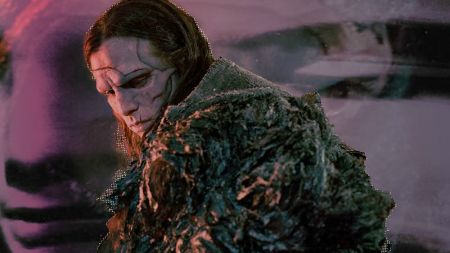
11. FRANKENSTEIN
When I first heard that visionary director Giullermo del Toro was going to make a new film adaptation of Mary Shelley's classic novel, my first thought was "why on earth would I want to see yet another film version of the Frankenstein story?" I mean, it seems like we've gotten every possible interpretation, but then I saw it, and realized just how much of a passion project it had been for Del Toro to make this film. And upon experiencing his beautiful version, it's now hard to think any other version could ever be as strong, and yes, beautiful as this one is.
It's almost like Del Toro found something that no other filmmaker had yet found in this material. The film's structure is especially striking: it opens at the end, in that bleak, frozen pursuit, then slowly rebuilds the story by shifting whose eyes we're looking through. Moving between Victor's version of events and the Creature's lived experience completely reframes the story. What starts as gothic spectacle becomes something much sadder and more intimate - a meditation on loneliness, rejection, and what happens when someone is brought into the world without love or guidance.
The physical craft of the film is just as impressive as the storytelling. You can feel that this is a movie built with real spaces, something very rare in today's CGI world. The production design is gorgeous in every single location - towering interiors, cavernous stairwells, flickering labs crowded with strange machinery, and icy, wind-beaten exteriors. There's a sense that the camera is discovering these environments along with the characters, giving the world a texture and depth that you don't get from digital backdrops. The environments mirror the emotional states of the characters - grand, obsessive, isolating - and that gives the film a strong, cohesive visual identity.
At the center of it all, Jacob Elordi brings a surprising tenderness to the Creature. His performance is restrained, wounded, and deeply human in a way that was a wonderful surprise. This version of the monster isn't defined by spectacle but by quiet observation - the way he watches people, absorbs language, reacts to cruelty, and still reaches for connection. It's a tragic performance that really makes you feel, because the film never lets you forget that this is a being who wants to belong and doesn't understand why the world keeps turning away from him.
And then there's the ending - one of the most truly haunting and beautiful endings of the year. Instead of leaning into shock or cruelty, the film closes on something more reflective and emotional, lingering on what it means to exist after being abandoned by your creator. By the final moments, the movie has transformed from gothic horror into something closer to a tragic fairy tale - a story about creation, responsibility, and the all too human feeling of wanting to be seen.
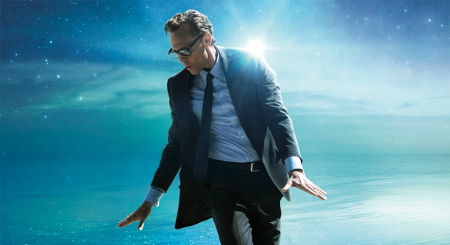
12. THE LIFE OF CHUCK
One thing I will never understand is how some studios simply dump some of their films in the wrong time of year, hardly give them any kind of marketing, and just seem to cut them loose. That's what sadly appeared to happen with this one, which was truly one of the year's best films that deserved a whole lot more recognition. I mean, this film is most definitely a tough film to sell or explain, but it sure deserved a better chance to find an audience. And definitely should have been released at the end of the year instead of dumped into the craziness of summer blockbusters.
We often hear about films described as "life affirming", and this was never more true a description for this incredibly special movie. Once again adapting Stephen King, writer-director Mike Flanagan takes on the short story featured in the author's 2020 collection, "If It Bleeds". It's a film with a curious narrative structure that poses existential questions about the meaning of life, leading to a metaphysical understanding wrapped up in mathematics and Walt Whitman's poem "Song of Myself." As one character explains in a beautiful speech, there's an art to how math can help us understand our place in the universe, from tracking the length of a day to charting the tempos of music and heartbeats. But drawing from Whitman, there's a more intuitive way to achieve understanding - a feeling that every individual is complex, unfathomable, and a prism for all humanity. In a manner both passionate and eloquent, Flanagan has made a profound, searching film that imparts a philosophy about who we are and how we're all interconnected. Flanagan's approach brings cinema and literature together in a truly accomplished way to underscore the more cinematic aspects of King's writing while also folding literary elements into his filmmaking.
Following the short story's nonchronological structure in three acts, Flanagan begins with "Act Three" and works his way back through time to explore aspects of Chuck Krantz's life, ultimately ending when Chuck was a child. However unconventional the film's structure, it's held together partly by the power of Flanagan's impressive cast, particularly Tom Hiddleston, one of Mark Hamill's best performances ever, and even a welcome return to film for Mia Sara.
Ultimately, the film is such an emotionally overwhelming experience, full of humanity, joy, and sadness, and anchored by a poetic understanding of life. How many movies give us a philosophy for how to live? How many movies impart any feeling whatsoever on our place in the universe? Here's one that considers how existence might be explained by mathematics, by expressions of poetry and dance, or something altogether otherworldly. It reminds us to embrace and savor every moment, because one of them will, eventually, be our last. Everyone dies, but we don't often live like we do. We should be living like every person we meet is another chance to expand our universe. The world is suffering from a vile strain of intolerance right now; people have shut themselves off from one another and stopped practicing empathy. "The Life of Chuck" is the rare film filled with so much hope that one day, we can do better.
13. SIRAT
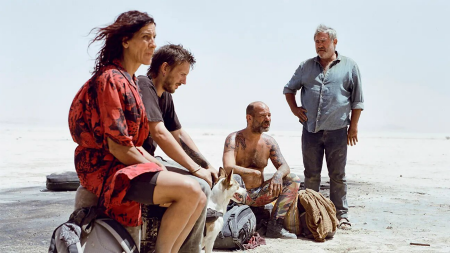
The Arabic word sirat means "path" or "way"; in Islamic scripture, it refers to a narrow bridge that connects Paradise and Hell. That makes it a perfect title for Oliver Laxe's new movie, another example of the truly great international films this year.
It is a survival story about several unlikely traveling companions making their way through a terrible stretch of the Sahara Desert. It carries echoes of countless earlier films, from the arid landscapes of a classic Western to the post-apocalyptic setting of a Mad Max. But nothing about about this film feels derivative. It's an astonishing and thrilling piece of cinema. It begins somewhere in southern Morocco, where hundreds of nomadic revelers have gathered for a rave. It seems that a worldwide war or something like it has broken out, though the specifics are left vague. Whatever's going on, this astonishing opening plays like a party at the end of the world. It sweeps you up in the intense physicality of the dancing and the propulsive beat of the music, composed by the experimental electronic musician Kangding Ray.
The core story follows a middle aged man is searching for his 20-something daughter, Mar, who vanished months ago, and who he suspects is among the ravers. Sergi Lopez is terrific as the father whose child has disappeared and who's understandably mistrustful of the world. But even at his bleakest moments, his character receives unexpected acts of compassion from his new companions.
"Sirat" is a visually and sonically overwhelming experience; it's full of majestic desert vistas and propelled by incredible percussive score. It's also a drama of extraordinary tension and, eventually, shocking tragedy, in which death has a way of striking when you least expect it.
At one point, Lopez's son asks one of the ravers if he misses his family while traveling on the road, and they respond, "I prefer this family." That might sound cheesy on the surface, but Laxe's film is as sincere in its tenderness as it is unrelenting in its ferocity. There's something powerful about the movie's belief that, even as an apocalypse looms, kindness can survive and meaningful relationships can form. Just because the world is pitiless, this film suggests it doesn't mean that people have to be.
14. THE BALLAD OF WALLIS ISLAND
This was a year that had so many movies that I found myself so anxious to watch again and again, and this one was just a sheer delight I would include in that list . And this is also the point in the countdown where it becomes almost impossible to truly rank one film over another. They were all so exceptional and so different from one another in what was a welcome embarrassment of riches for fans of truly great cinema.
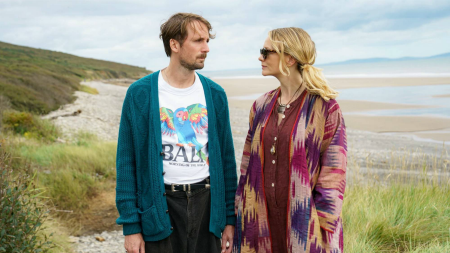
This film was so small that unfortunately most people forgot about it or didn't see it, but I was in love with it from the very first few minutes. The film is about the fictional folk duo McGwyer Mortimer (played brilliantly by Tom Basden and Carey Mulligan) who were big back in the day ... but not quite that big. But they were big to one of their very biggest fans, and Charles (Tim Key) is exactly that. He's also a reclusive lottery winner, giving him the motive and the means to stage a private reunion gig for an audience of one on a remote island.
Basden and Key starring in a film about a folk band reunion might have you expecting something more like sketch comedy, but it thankfully turns out to be something else: a sometimes funny but also melancholy piece of work. It's more interested in maintaining a consistent and sincere emotional connection than in cheap laughs or oversentimentalized emotions. This is a film that lives and dies on its performances, and these three keep you engaged the entire time. Basden does excellent work as a character whose face does the talking: a spiky presence, all low cut T-shirts, wounded ego, and rounded shoulders. It's a perfect performance both as an actor and, when the songs come along, as a musician. Basden wrote the music and it is played and sung completely straight; it's all truly beautiful. Mulligan is a delight as a woman who was once part of the duo and now makes jam in Portland with her birdwatching husband.
There's such a human story being told here and especially so mid-way through the film with two scenes in particular. The first singing collaboration between Basden and Mulligan in many years is so touching, followed by the night time scene shortly after with the release of sky lanterns to a pitch black sky. It's a truly special film, and definitely one of the best of the year.
15. THE SECRET AGENT
As most people have said and was reflected in the Academy Awards nominations, this was an exceptional year for international films, and one of the most unique was this powerful film written and directed by Kleber Mendonca Filho. Few films put their cards on the table so promptly and persuasively as "The Secret Agent" does. It starts with a radio recording from the 1970s looking back to the decades before, as two men talk about the samba they danced to in their youth. It's an introduction to that music, but it also projects a sense of loss pervading the film before a single character has even been introduced.
After a beautifully crafted opening, we get the titles "Our story is set in the Brazil of 1977, a period of great mischief ...". Its opening announces itself as a portrait of Brazil couched in both period and regional specificity, implying its own deep analysis without indulging the need of outsider audiences for added context. The film demonstrates such a love of cinema itself, it's hard for a lover of movies to not respect this film so much. It's a film that could be best described as a rumination on memory. This refers to history as preserved in official sources and as remembered (or not) by those who lived it. This refers to individual remembrance and collective experience, the personal and the political in how they intersect and parallel each other.
At its core, the film exposes the absurdities of life under authoritarian oppression, a theme which eerily doesn't make the film just exist as a period film. I was surprised though with how much humor and lightness it has along with all the suspense. It's a master class in perfecting the balancing of tones, and it's truly unlike any other film of that type in this regard.
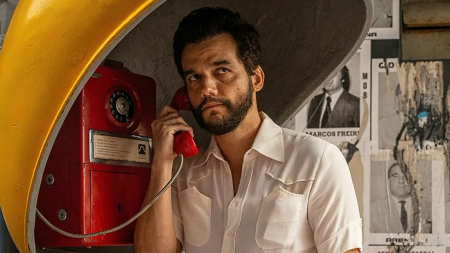
The film's anchor is an incredibly powerful performance by Wagner Moura, portraying a man who has recently lost his wife - dead from unknown cause - and his job - victim to the corruptive alliance between politics and capital, the public sector and private power. He takes residence in a place for political refugees and social outcasts, while the resistance tries to forge him papers so he can escape Brazil with his son, Fernando.
Like the very best of cinema, the film left me with so many fascinating questions. Who are we? Who will we let ourselves become, and what will we leave behind? Identity is defined by history, the truth and the twisted lie that's imposed, whether force fed to us or shoved down our throats. While a very strong meditation on Brazil, Mendonca's film is an absolute wonder whose complexities cannot be described fully. It's so full of life, so curious about everything it regards, seemingly always looking in two directions.
16. WAKE UP DEAD MAN: A KNIVES OUT MYSTERY
Rian Johnson's "Knives Out" trilogy is the rare film series that has continually gotten better with each new film. As much as I loved the second film, I found myself loving this one even more. Daniel Craig returns as private detective Benoit Blanc, in a slightly more serious mode than before, with not as many of his usual quirky one-liners, but still remaining such an absolute joy to watch. And just like the previous films, he is surrounded by a first rate cast who all deliver delicious performances as we wade through a who-dunit trying to find the truth.
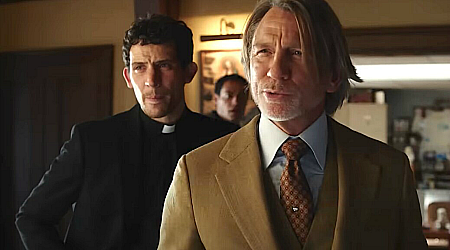
This time around, Blanc arrives at a Catholic church in upstate New York to investigate the murder of its presiding priest, Monsignor Jefferson Wicks, a ferocious man played by Josh Brolin, thundering his reactionary views from the pulpit. The prime suspect is the sweet-natured, thoughtful junior priest Father Jud Duplenticy, amusingly played by Josh O'Connor, who was upset by the Monsignor's heartless attitudes and was caught on video threatening to cut him out of the church like a cancer. It's the perfect setup for a film that remains comedic and fun while also containing some really beautiful looks at the nature of goodness, religion, and true faith.
As with the previous "Knives Out" films, the characters are not, in fact, equally important and equally capable of murder. An inner core of suspects emerges and their guilt discloses itself slowly at the end, as opposed to being withheld for a final reveal. What a treat it is though, with a first rate cast like this, and particular O'Connor, who is truly proving himself as one of our great contemporary actors. More of a buddy movie than the previous entries, the balance that O'Connor and Craig strike is as fascinating as the ever-complicating case they're attempting to crack. As the mystery evolves into something less invested in clues and more in emotion, Johnson's masterful blend of tones - self-awareness, savviness, and cornball sincerity - leads to a larger analysis of its setting more revealing than a dozen confessional monologues. It's here that Rian Johnson continues to mature, even within the confines of the throwback franchise he's built for himself.
In a stressful year where I valued having fun at the movies again, it was also refreshing to find one whose questions are bigger and better than ever.
17. BLUE MOON
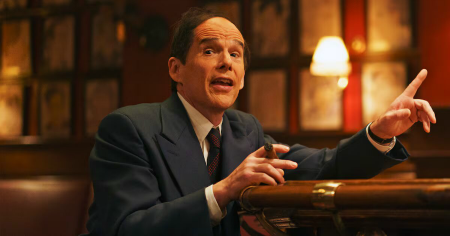
One of the things that made 2025 such a great year for movies is that there were so many brave filmmakers that took risks and in some cases like this one, made the type of film we unfortunately never to get to see anymore. How many movies do we see nowadays that are primarily dialogue based and set in a single location? Richard Linklater did it with this film which was such a genuine surprise in a career that just continues to give us one rewarding film experiment after another.
It tells the all but unbearable story of Broadway lyricist Lorenz Hart just after his split from Richard Rodgers. I must admit I had never heard of Lorenz Hart, or knew about his partnership with Richard Rodgers before he went on to ever greater fame with . Hart is played with campy brilliance and fake smallness by Ethan Hawke, who is often digitally reduced in size but always minimized in scene after scene to further cement home how marginalized and small he truly feels inside.
As part of the Broadway songwriting team with composer Rodgers, Hart was responsible for legendary numbers like The Lady Is a Tramp, Manhattan, My Funny Valentine, and of course Blue Moon. But exhausted by Hart's alcoholism, unreliability, and depressive outbursts, Rodgers broke with him and partnered with Oscar Hammerstein II to write "Oklahoma!" and then a huge number of hits after that. The film imagines the deeply depressed Hart in a bar after "Oklahoma!"'s first-night New York audience in 1943, looking on with envious despair as the show proceeds, hating its bland sentimentality, hating the exclamation mark at the end of the title, but heartsinkingly aware of how effective it is. He knows a hit when he sees one - and feels himself descending into failure.
On top of that, Margaret Qualley ruthlessly portrays a young woman who wants Hart to be the guy best friend to whom she can confide her intimate stories with, which comes out in one of the most emotional and devastating scenes of the year, a masterclass in acting by Hawke. He shows that Hart partly takes voyeuristic pleasure in hearing about these boys but he is also genuinely, tragically enamored with Qualley's character and the movie tells us about something rarely touched on in films about the world of musical theater or the movies: the terrible overlap between professional and romantic failure. Yet at some level, Hart is defiantly aware that what he has achieved will survive.
18. A HOUSE OF DYNAMITE
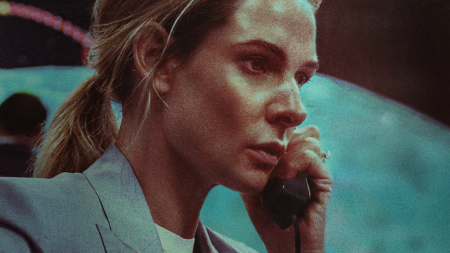
It was one of the more divisive films of the year, and while so many came down on disliking the film because of its ambiguous ending, I feel so many missed the point of what was truly one of the scariest and well executed films of the year. The ambiguous ending is the ENTIRE point of the film ... that in a possible nuclear decision that has to be made in twenty minutes time, there is NO answer which is a good one or the right one. Now if you'll forgive me, I must go on a small rant to explain further. ??
One after another, people complained "we don't know what happens at the end." That kind of reaction has always driven me crazy. Some of the greatest films ever made left us wondering - 2001: A Space Odyssey, Inception, No Country for Old Men, The Graduate, Lost in Translation. Those endings didn't spell everything out, and that's exactly why they've stayed with us. They respected the audience enough to think, to interpret, to keep the conversation going long after the credits rolled. We've gotten so used to movies telling us exactly what to think and feel that we've forgotten how to just sit with a story. To wrestle with it. To live in that uncertainty for a bit and actually think.
Not every movie has to hand you the ending on a silver platter. Some of the best films - the ones that stay with you - don't. And that's not bad storytelling; that's trust. That's a filmmaker saying, "I believe you're smart enough to figure it out, or at least to feel something real without me spelling it out for you." But somewhere along the way, audiences started needing everything explained, resolved, and confirmed in the last five minutes. It's like we've become afraid of ambiguity. And it's sad, because when we lose that space for interpretation, we lose what makes film so powerful - that ability for you to find your own meaning in it.
If you actually pay attention to this film - and I mean really pay attention - the answer to the ending is right there. The director isn't being vague for the sake of it. The clues are in the tone, the characters and their struggle, the final silence. But you have to listen. You have to think. And it reminds me of what Martin Scorsese said in the "Mr. Scorsese" documentary from this past year - when he made "Goodfellas", people complained about certain scenes, and his response was basically, "Who cares what the audience thinks?" He's right! Film is the only art form where the artist is expected to change their work because of how people react. A painter doesn't repaint their canvas because someone didn't like the color. An author doesn't rewrite a book because test readers wanted a different ending. But somehow, filmmakers are expected to cater to audience comfort. It's insane. Art isn't supposed to please everyone - it's supposed to say something.
So yeah, the ending of "House of Dynamite" doesn't tell you everything. Maybe you're supposed to walk away with questions. Maybe you're supposed to feel unsettled. Maybe that's the whole point. And honestly? That's what makes it great. AND one of the year's best films.
Kudos to Kathryn Bigelow and everyone involved in this film and any filmmakers nowadays that are bold enough to trust the audience to think and pay attention. Rant over. Sorry, these kinds of things when it comes to movies have always riled me up ... and maybe that's another thing a film like this should do to us. We could be sadly close to something like this happening one day ... maybe even more than we ever have been. I don't know about you, but that has me pretty unsettled.
19. THE PERFECT NEIGHBOR
This was another incredibly powerful year for documentaries which told so many heartbreaking yet important ways in visually captivating ways that the news can never manage to convey or perhaps effect much needed change. One of those documentaries was this incredibly sad but unfortunately true look at our contemporary times and the racial divides that still exist, right in our own backyards.
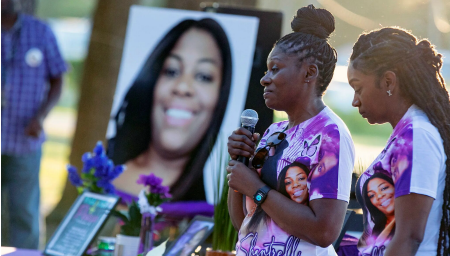
With the proliferation of police body cam footage, we're finding more and more filmmakers who are skillfully weaving together these videos to show in real time how so many of these tragedies occur. Now comes Geeta Gandbhir's documentary about the horrible case of Ajike Owens in Ocala, Florida, a Black woman whose four young kids "allegedly" harassed and tormented her white neighbor, Susan Lorincz. In 2023, after an escalating series of neighbor-dispute incidents in which the police were repeatedly called, Lorincz shot Owens dead through her closed front door, when Owens went to Lorincz's house to confront her about throwing objects at her children.
The arresting officers found evidence that Lorincz had done online research in advance into Florida's "stand your ground" laws, which allow householders and others to shoot if there is a significant presumption of danger. The movie builds its story with the body cam footage generated during the repeated police visits to the scene before the killing, and then at the horrific and chaotic crime scene itself - prefaced by 911 audio material of Lorincz calling the police in a melodramatically shaky voice.
For what seemed to her neighbors a very long time, Lorincz was not even arrested and charged, only detained and even offered a hotel stay away from home for the night, an unbelievable example of how differently police treat suspects. And when she was finally formally arrested in the holding cell, there is an extraordinary sequence in which Lorincz simply refuses to stand, refuses to put her wrists out for the cuffs, not aggressively, but with the politely self-pitying air of someone whose mental health means that she just can't do it.
The film simply portrays this whole tragedy through all this available footage, not leaving us with any answers, but what we feel so often nowadays with this unnecessary tragedies ... just deep sadness as we try to hope that any of this might change for the positive someday. "The Perfect Neighbor" is, on the most visceral level, a documentary horror film built with police footage, also revealing how a violent tragedy can be unwittingly brought about by unchecked and ridiculous grievance, and a law that weaponizes white fear more than it guards anyone's peace. The only satisfaction to be found after watching this film is knowing that Susan Lorincz is behind bars and Ajike Owens stood up for her kids. As Al Sharpton says at her funeral: "Because mama knew if she allowed people to degrade you and she'd not stand up for you, that you'd grow up with a feeling that you were something to be degraded." I think that perfectly encapsulates what audiences should take away from this documentary.
20. HIGHEST 2 LOWEST
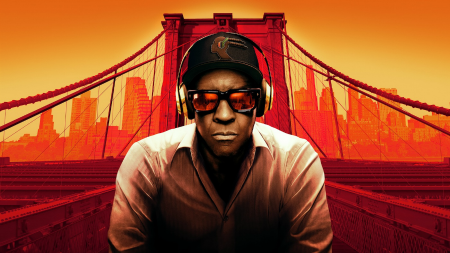
Spike Lee has always been one of the greatest directors of all time, even if some of his latest work hasn't quite matched the masterpieces of his past. While I wouldn't put this film up with those masterpieces, this was still a remarkable return to form with the Spike Lee urgency of old seen through the prism of contemporary New York and American life. It also helps that he re-teamed with Denzel Washington, who also delivered one of his really great performances in this film.
Doubling as a love letter to New York City's sports and its music, it's a remake of Akira Kurosawa's classic noir "High and Low". In Kurosawa's movie, Toshiro Mifune played Gondo, the prosperous salaryman working for a shoe manufacturer who rashly mortgages the luxurious penthouse-style family apartment with its spectacular views of the city (encouraging hubris, of course) so he can he buy out a controlling interest in the firm. But just as he is about to pull off the deal of a lifetime, a kidnapper takes a boy he wrongly thinks is Gondo's son, but is in fact the son of Gondo's heartbreakingly loyal and submissive chauffeur.
In the original, there was a distinct class or caste distinction between Gondo and Aoki, however well-meaning and conflicted Gondo was. This isn't the case here: Denzel Washington's King is no snob and has a real love for Paul - but the basic dilemma is still there. Should David throw away his business plan and spend his money to save someone who isn't family? Lee brilliantly portrays some of what is going on in King's mind through some brilliant dizzying camerawork that we haven't seen from Lee in quite some time.
I very much enjoyed how Lee plays out this moral dilemma, and the unexpected turns the film takes, particularly as it spirals toward the end in a brilliant and unexpected dialogue between a young rapper and Washington's King, one of the best sequences of the year.
21. WEAPONS
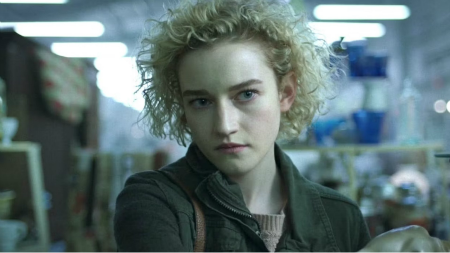
I've never been a huge fan of the horror film genre, especially in recent years, mostly because most seem like exercises in excessive gore and unoriginal ideas which only serve to shock instead of portraying horrific ideas which last in your head long after the film is gone. But this year, we did finally get one that delivered on both a horrifying concept and executed with rare craft that made this film elevate beyond being just a horror film.
The film begins with a unique and horrifying concept. In a small Pennsylvania town, the mysterious disappearance of seventeen third-grade children who vanished in the middle of the night is tearing a town apart. The film is fascinating how it builds as a thriller, broken down into chapters focused around a different character. Director Zach Cregger stages action with cinematic flair, and he's good at making you laugh in between traditional horror jolts and screams. He shows how horror manifests not just in dark hallways and creaky basements, but out in public, in the bright light of day, which somehow makes it even creepier.
It's clear enough about halfway through what's happened plot-wise, but the movie is so full of so many ideas that invite deeper interpretation. Maybrook is in many ways the quintessential American town, pretty and idyllic on the surface, but filled by issues of addiction, poverty, and police brutality. The children's disappearance evokes both the satanic panic of the '80s and '90s and the continual tragedy of school shootings - something the film makes explicit with a hallucinatory image of a semiautomatic weapon looming over someone's house like a ghost.
The most haunting plot point involves the Ring cameras that are everywhere in the neighborhood, speaking to our moment of heightened surveillance but not necessarily greater security. The cameras here are a silent witness to horror, capturing footage of the kids running away on that terrible night.
Plus enough can't be said about Amy Madigan's Oscar nominated performance ... you can't talk about it without giving away too much, but safe to say, it's one of those performances you remember long after the film is over.
22. THE LOST BUS
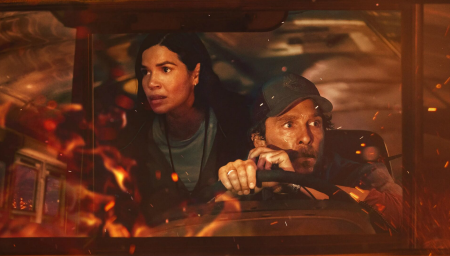
I've long been impressed by the work of director Paul Greengrass. His incredibly visceral visual storytelling always seems to be in pursuit of understanding what happens at the extremes of life, specifically in the context of real-life events. "The Lost Bus", loosely based on the book "Paradise" recounting the truly astounding events of the disastrous 2018 Camp Fire, one of the most devastating wildfires in the history of California, marks a powerful return to form for Greengrass. Matthew McConaughey and America Ferrera are very strong in an incredibly engrossing experience that finds that tricky and difficult to strike balance between satisfying the requirements of a disaster film in terms of scale and scope and building a lasting connection between the viewer and that spectacle through powerful characters. To achieve this, the film wastes no time with setting up an impending catastrophe the way many disaster films of the past usually would do. And how long has it been since we've had a really well made disaster film?
McConaughey's portrayal of a bus driver at what he saw as the rock bottom of his life who ends up listening to his conscience and does the right thing at the right time is therefore a powerful portrait of the kind of heroism we might actually experience in our lives. The film is actually a solid examination of the definition of bravery itself as an act of defiance of cold-hearted logic. When the logical thing to do is to run away from danger, running towards it instead might only be one of two things: stupid or brave. And bravery is when running towards danger is the right thing to do. The minute his character chooses to do what's right, turns the bus around and volunteers to go back to the danger zone and evacuate stranded children is a great, grounded example of just that. It is also a turning point for the entire movie after which there is no escape for the audience, as the incredibly powerful visual effects of the fire keep us trapped until the very end.
It might be schmaltzy and obvious in many respects, but it's also the type of movie that rarely gets made any more, and watching this made me realize how much I actually miss that. As did many of the great films this year, by the way.
23. NOUVELLE VAGUE
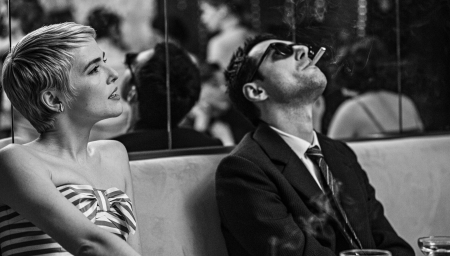
One of cinema's most fascinating experimental directors, Richard Linklater, continued that trend of experimentation with this film nerd's delight, a beautiful ode to the French New Wave. This time capsule is not only a lesson in movie history, but also a celebration of the creative independence forged by the brilliant filmmakers at the heart of the movement - filmmakers who would reshape cinema from France to Hollywood. Officially, the film is the story of Jean-Luc Godard making his film "Breathless". Aside from being shot in gorgeously gritty black-and-white, "Nouvelle Vague" doesn't attempt to mimic the choices - like the jump cuts, the documentary style camerawork, the heavy use of improvisation - that made Godard's directorial debut so radical when it hit theaters in 1960. It's more a light-footed but straightforward look at how the 28-year-old Jean-Luc, worried about feeling like the last of the Cahiers du Cinema crew to make the leap into directing, finally ends up making his first feature, enlisting friends and skeptical professionals for a ramshackle, low-budget production not everyone involved was convinced would produce a finished product. In that way, it becomes a true-to-life story of the chaos and madness that usually ensue when making a movie and the pure luck sometimes when all that chaos produces something meaningful and lasting.
The movie, which is in French, is an incredible feat of casting, with an ensemble heavy on newcomers and unknowns. Linklater's film recreates late '50s Paris with the help of historical research, careful costuming, and vintage cars, but as much as it enjoys the moment it's recreating, it's not just a play of nostalgia. It delights in its characters' rule-breaking, playfulness, and experimentation, in the wheelchair used for a dolly shot, in filmmakers dancing together between takes.
The production scenes are where the film is at its strongest. You see the stress on crew faces when script pages vanish, you hear the awkward silence when a director arrives without a shot list, and you feel the pull of Paris throughout. Linklater and his team recreate the late fifties with a warmth that feels truly lived in. Cafes and cutting rooms feel cramped, and the streets feel like the only place where ideas can breathe.
This film is a reminder that Linklater keeps making movies because he likes to look closely, whatever the subject might be. This one will not inspire a movement, and it does not try to, but it earns its place as a smart film about a seismic moment. By the time "Breathless" finally clicks into focus, you understand why the chaos mattered and why the gamble was worth it.
24. MATERIALISTS
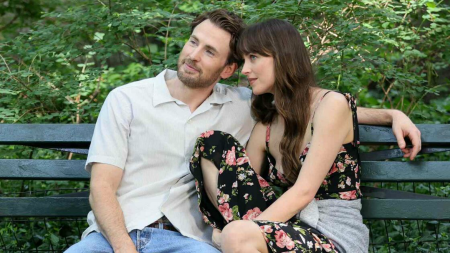
A flawed but ultimately unique film on the perils and metrics of modern dating, this film explored how apps and matchmaking services reduce people to an objectifying checklist of preferred and non-negotiable characteristics. It is the second film from Celine Song, whose debut film "Past Lives" was one of the best films of recent years. Rather than the lighthearted rom-com that most were expecting, this film has much more on its mind: the risks of dating, the reciprocal aspects of marriage, the superficiality of customizing your next date like a checklist, and the impact of finances on a relationship. Oh, and let's not forget love.
The film's remarks on romance and marriage are timeless, which Song illustrates with a dreamy opening set in prehistoric times, where a caveman courts a cavewoman with an offering of stone tools and flowers. Cultures around the world support arranged marriages and couplings negotiated like a business deal. However, Song reminds her audience that people are capable of hiding their flaws and predatory behaviors in a very realistic sub-plot that makes this film so much more timely and deeper. Song thoughtfully explores how people preach about the purity of love, but then they deny themselves love based on their materialist needs or superficial desires. What's curious about "Materialists" is that she still seems to believe in marriage even after cutting into and exposing its more contractual facets.
Her casting is unique and works remarkably well, with great performances turned in by Dakota Johnson, Chris Evans, and Pedro Pascal, in a film where the main question on its mind is about love and money. Namely: Given the choice between a rich guy and a poor guy, which one should you marry? Though critics' reviews (and many audience reactions) were mixed, it's hard to overstate how skillfully this movie managed to flummox people who want to hang big arguments about modern life on fictional stories. When I go back to the question of what Song was trying to say about this particular moment of dating, and why "Love or money?" struck her as not an overdone principle but an exciting one, maybe the polarized responses her film inspired are proof that she was on to something. And for me, that kind of film is rare in this genre, and why I think it ends up being worthy as one of the year's best.
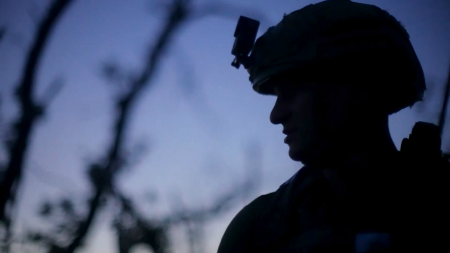
25. 2000 METERS TO ADRIIVKA
I think war documentaries are some of our most important films that should be required viewing, particularly for those in power who send others to fight for their causes. Often, these kinds of documentaries are the only way to truly see the sadness and randomness of death in combat, and what a futile effort it often is as one life after another is extinguished. I'm also so in awe of the documentary filmmakers who put their own lives at risk to get some of the most stunning and remarkable up close footage to the realities of war. And just when I thought that I had seen it all with how close a war documentarian could get, this one goes even further.
This film follows a platoon of Ukrainian soldiers fighting their way through a forest to the village of Andriivka, 2000 meters away. If the soldiers can retake this village, they believe they will impact the Russian transport system. For the most part, these front-line soldiers are being shot at, and returning fire, in a particular immersive sequence. The motivation of the Ukrainian soldiers is crystal clear. They are fighting for their homeland, their families, and their freedom. In contrast, a Russian captive is asked why he is fighting in Ukraine. His honest answer is: "I don't know." In one simple exchange, it tells you everything you need to know about this war.
One minute, a soldier is alive and talking. We get to know him as a person for a bit. Then, without a sound, he is pronounced dead by the narrator, as we immediately hear how he ended up dying just a few months later. Instead of waitign for an end credit saying what happened to these soldiers we got to know, we are given the fact of their death while they often still talk about their hopes after the war. The camera is a ruthless witness to it all, often through GoPro cameras attached to soldier's images. This is about as close as it comes to being in real combat.
The film was directed by the multi-award-winning Ukrainian Mytyslav Chernov, who won a Best Documentary Oscar in 2024 for the also stunning "20 Days in Mariupol". This is a deeply personal film but he maintains a dignified, documentarian, arm's-length stance rather than delving into the rights and wrongs of Ukrainian history and its shifting borders.
What is the main takeaway of the film? Is it the futility of war? Maybe so, but not if you are at war with an aggressor who wants to take over your homeland. The question here is why. Why does this conflict, in the 21st century, have to be settled by First World War-style trench warfare involving young men on both sides? It is clearly insane, yet it continues. The film is a very challenging piece of work, but yet feels strangely calm. Probably because it is so starkly factual. One of the soldiers asks his commander: "What if this war is until the end of our lives?" Now that is a harrowing thought. And sadly means, we will be seeing more of these kinds of documentaries until hopefully one day, they make enough a difference to end war.